Clean hands first
Wash your hands before touching the tattoo or bandage. Avoid unnecessary contact from other people, pets, gym surfaces, and shared towels.
Tattoo Aftercare Guide
Follow the written instructions Josh or your tattoo artist gives you at the appointment. This page provides general education and does not replace medical advice or artist-specific bandage instructions.
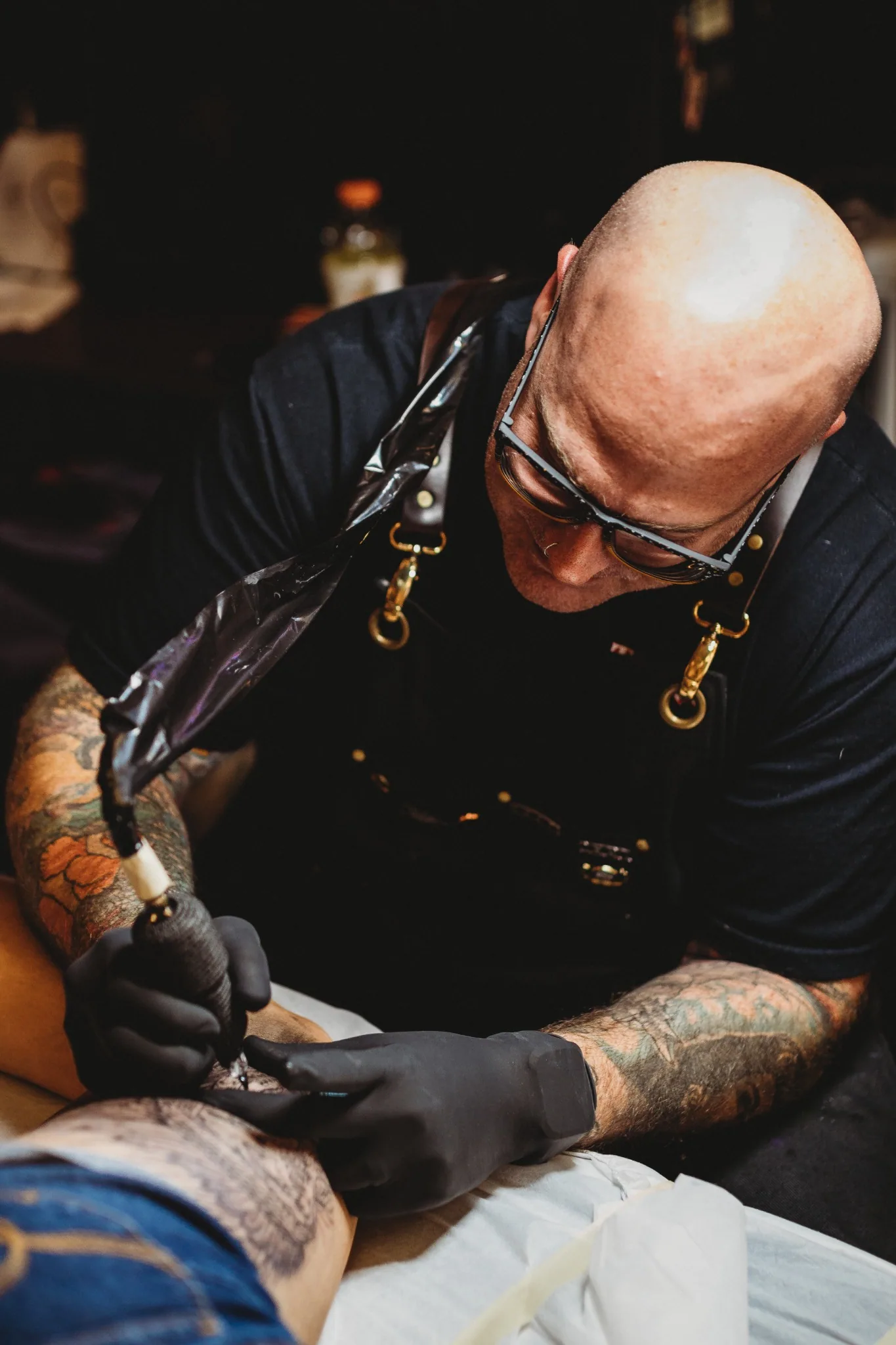
Start here
Bandage type, tattoo size, placement, skin sensitivity, and the way the session was completed can change the first steps. Do not remove or replace a medical-style adhesive bandage on a schedule copied from another person; follow the instructions given for your tattoo.
General healing care focuses on clean hands, gentle washing, light moisture, breathable clothing, and avoiding soaking, friction, picking, and ultraviolet exposure while the skin is recovering.
Step by step
Wash your hands before touching the tattoo or bandage. Avoid unnecessary contact from other people, pets, gym surfaces, and shared towels.
When instructed to wash the tattoo, use lukewarm water, a gentle touch, and a mild fragrance-free cleanser. Pat dry with a clean disposable paper towel or allow it to air dry.
Apply only the product and amount recommended by the artist. Heavy layers can trap moisture and stick to clothing.
Stay out of pools, hot tubs, lakes, rivers, and baths while the tattoo is healing. Showering is different from prolonged submersion.
Choose clean, loose clothing that does not rub or stick to the tattoo. Avoid activities that repeatedly stretch or abrade the area.
Itching and flaking can occur during normal healing. Do not scratch, peel, or pick at the tattoo.
After healing, broad-spectrum, water-resistant SPF 30 or higher and sensible clothing help reduce ultraviolet fading.
Usually expected
Get medical help
Medical references
This page is educational and is not a medical diagnosis. Follow artist-specific instructions and contact a healthcare professional when symptoms are concerning.
Common questions
Surface healing often takes roughly two weeks, but deeper recovery can take longer. Size, placement, skin, health, and aftercare all affect timing.
Ask the artist about the exact placement and activity. Friction, stretching, sweat, shared surfaces, and tight clothing can interfere with early healing.
Avoid pools, hot tubs, lakes, rivers, and other soaking until the tattoo is healed and your artist says it is safe.
Contact a healthcare professional promptly. Seek urgent care for severe or rapidly worsening symptoms, fever, spreading redness, significant swelling, or signs of a serious allergic reaction.
Need a shop-specific answer?
Josh can answer project and aftercare questions based on the actual tattoo, placement, bandage, and appointment.